01
Heat pump quits on a 20-degree night in January and the house is dropping below 62 degrees.
What we do: We treat this as an emergency heat pump compressor repair McLean VA call. The tech tests the capacitor, contactor, and compressor windings first, because a failed capacitor at 20 degrees looks exactly like a dead compressor. We carry the common parts and prioritize homes with no backup heat.
→ Most of these calls are back online the same night with a capacitor or contactor swap. If the compressor is truly dead, we set up temporary heat and schedule replacement first thing.
02
A 17-year-old Trane in Country Club Hills is short-cycling and the electric bill jumped $90 last month.
What we do: Short cycling plus a bill spike usually means the compressor is drawing high amps. We test capacitance and amp draw, check refrigerant charge, and inspect the defrost control board. If the compressor is on its way out, we give you repair and replacement numbers side by side.
→ You get a clear decision: a $300 repair that buys two or three more seasons, or a new Energy Star system with a warranty. No pressure either way.
03
A mini-split in a West McLean home office stops cooling and the outdoor unit is silent.
What we do: Inverter-driven mini-split compressors fail differently than standard units. We test the inverter board and compressor module with the right diagnostic tools for Mitsubishi Electric and Daikin equipment, then quote the fix.
→ Most inverter board failures are a same-day repair. If the compressor module is gone, we give you the lead time on the part before we leave.
04
A frozen outdoor coil in Salona Village has been icing over every cold snap for two winters.
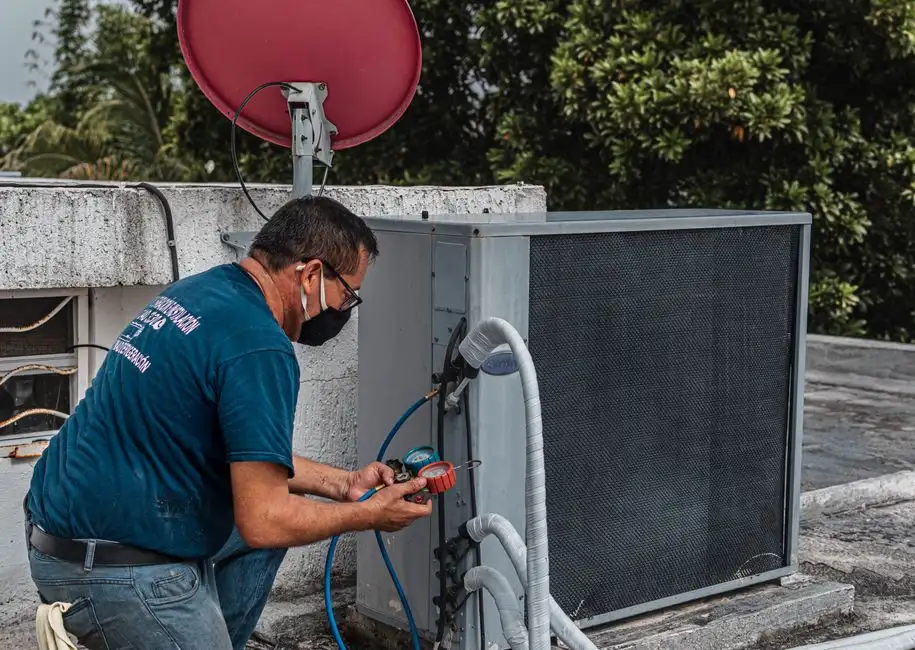
What we do: A coil that keeps freezing points to defrost cycle failure or low refrigerant. We thaw the coil, test the defrost control board and sensor, and check charge with a manifold gauge set. If the compressor has been overheating, we catch it before it fails.
→ The defrost cycle works again, the coil stops icing, and the compressor stops running at high pressure. That is what keeps it alive through February.